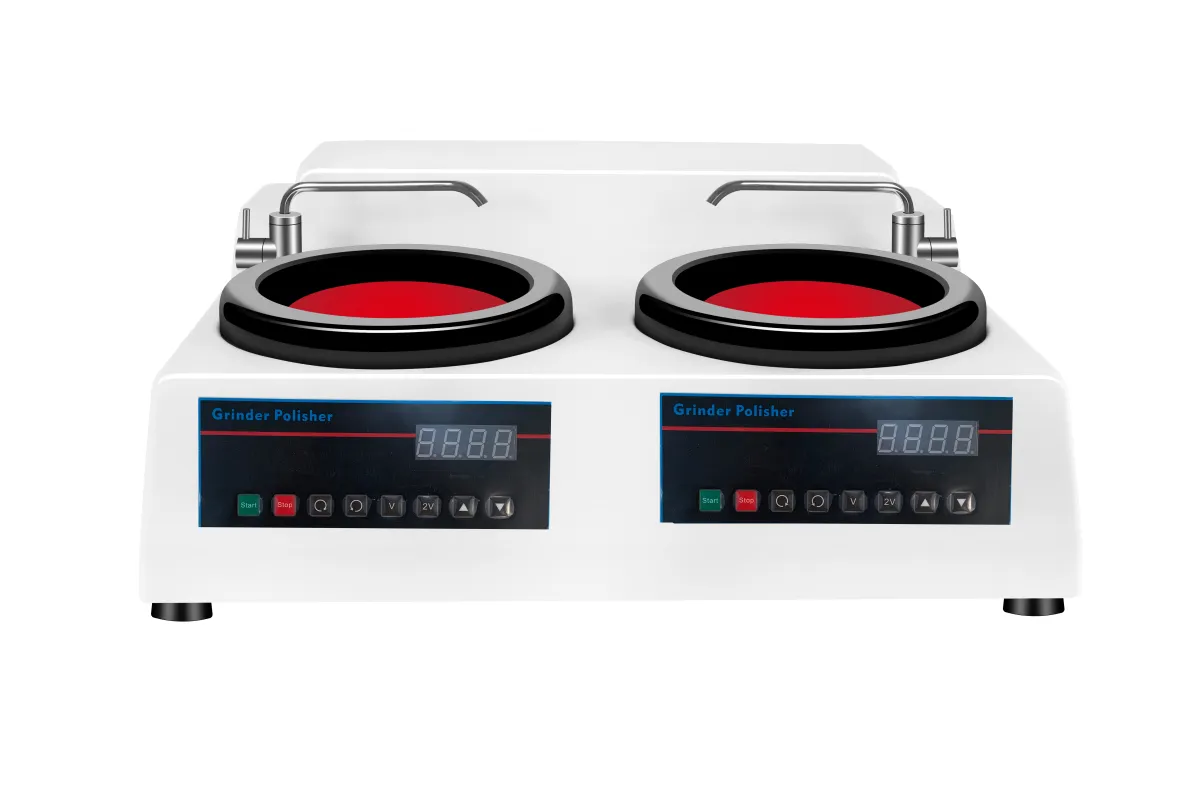
As a laboratory manager or technician, you know how critical the MP-2S dual-disc manual grinding and polishing machine is to your daily operations. However, its maintenance costs can be daunting, often consuming a significant portion of your equipment budget. What if you could reliably reduce these expenses by nearly 30% through proper upkeep? This guide arms you with practical, data-driven strategies to extend equipment lifespan, stabilize performance, and avoid costly downtime.
The MP-2S features a glass fiber reinforced plastic (FRP) chassis, engineered for corrosion resistance and durability in harsh laboratory conditions. Unlike metal bodies prone to rust and chemical degradation, the FRP maintains structural integrity while reducing weight, which contributes to easier handling during routine cleaning.
To maximize the FRP’s protective advantages, implement a strict cleaning protocol using non-abrasive detergents and neutral pH solutions. Avoid harsh solvents that can weaken resin bonds and compromise the casing over time. Regular cleaning not only preserves aesthetics but also prevents chemical residue accumulation, which can accelerate wear on adjacent mechanical parts.
The core of the MP-2S’s operational excellence lies in its variable speed control, encompassing precision gears, lubrication channels, and an electric motor with cooling mechanisms. Each component requires vigilant attention to prevent failures that spike repair expenses.
Neglecting these tasks causes premature mechanical degradation, inflating your repair bills and risking data integrity.
| Maintenance Task | Frequency | Key Points |
|---|---|---|
| FRP Body Cleaning | Weekly | Use non-abrasive cleaner, inspect for cracks |
| Gear Lubrication | Every 6 months / 1000 hrs | Use synthetic lubricant, check for metal shavings |
| Motor Cooling Fan Cleaning | Monthly | Remove dust, verify fan operation |
| Speed Calibration | Quarterly | Use certified speed meters, document results |
The maintenance nuances shift with your laboratory application. For example, metallurgy labs may deal with abrasive particles that necessitate more frequent gear checks and FRP cleans to mitigate accelerated wear. Conversely, new materials R&D environments might prioritize precise speed calibrations to ensure microstructural consistency.
Consider adjusting maintenance intervals by 10-20% based on actual usage intensity and environmental exposure to achieve optimal cost-efficiency.
Remember, consistent care guided by actionable insights not only keeps your grinding and polishing machines operational but also enhances the reliability of your test results—making it an investment in both your equipment and your lab's reputation.
Partner with the Industry Leader—Leizhou Jincheng’s Original Parts and Rapid After-Sales Support Are Here for You
When you choose maintenance parts and services from Leizhou Jincheng, you secure genuine quality assurance and rapid response times that minimize downtime. Equip your lab with trusted components that fit perfectly and perform reliably under continuous load.
 Metallographic sample preparation
SQ-60 high efficiency metal cutting machine
Data stability
ASTM E3-11
Intelligent cooling system
metallographic grinding and polishing machine
material quality control
sample preparation optimization
grinding speed adjustment
technical training for quality inspection
Metallographic sample preparation
MP-2DE Metallographic Polishing Machine
Micro defect analysis
ASTM E3-11 standard
High-performance grinding and polishing
Stability of temperature control in metallographic preparation
Temperature control accuracy of automatic encrusting machine
Consistency of metallographic sample formation
Curing control of thermosetting resins
Metallographic sample preparation technology
Metallographic sample preparation
SQ-60 high efficiency metal cutting machine
Data stability
ASTM E3-11
Intelligent cooling system
metallographic grinding and polishing machine
material quality control
sample preparation optimization
grinding speed adjustment
technical training for quality inspection
Metallographic sample preparation
MP-2DE Metallographic Polishing Machine
Micro defect analysis
ASTM E3-11 standard
High-performance grinding and polishing
Stability of temperature control in metallographic preparation
Temperature control accuracy of automatic encrusting machine
Consistency of metallographic sample formation
Curing control of thermosetting resins
Metallographic sample preparation technology