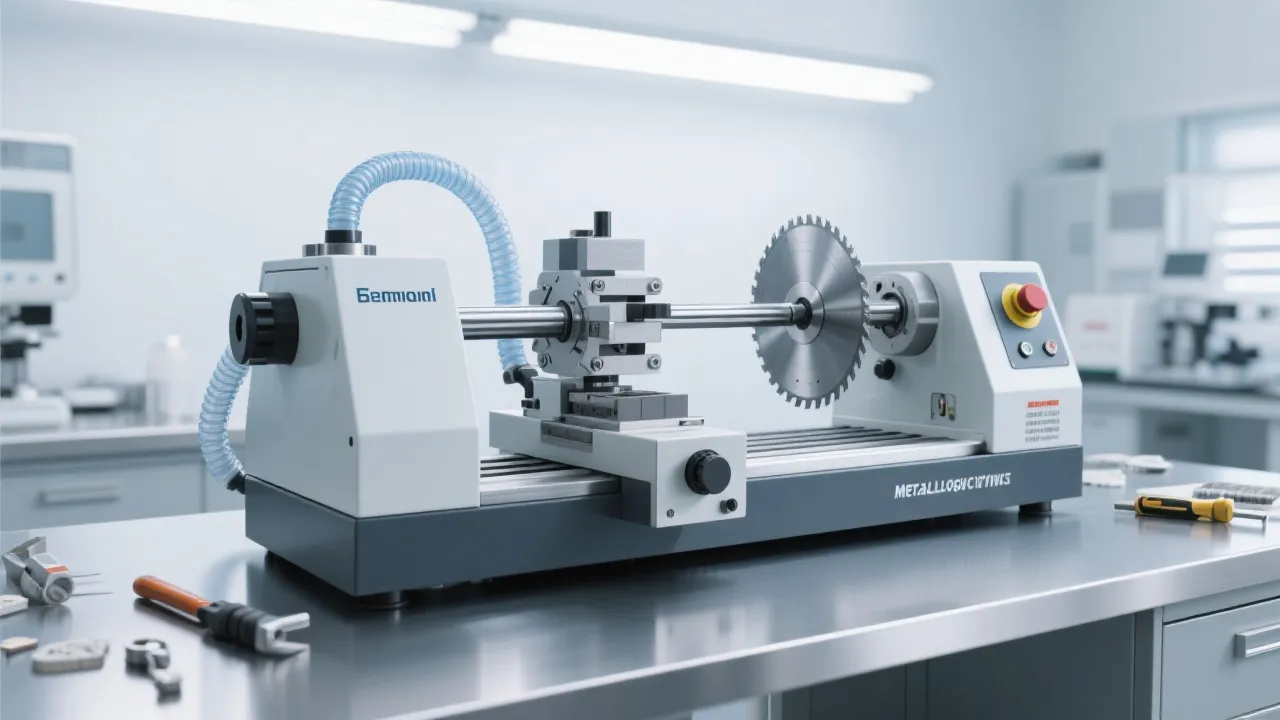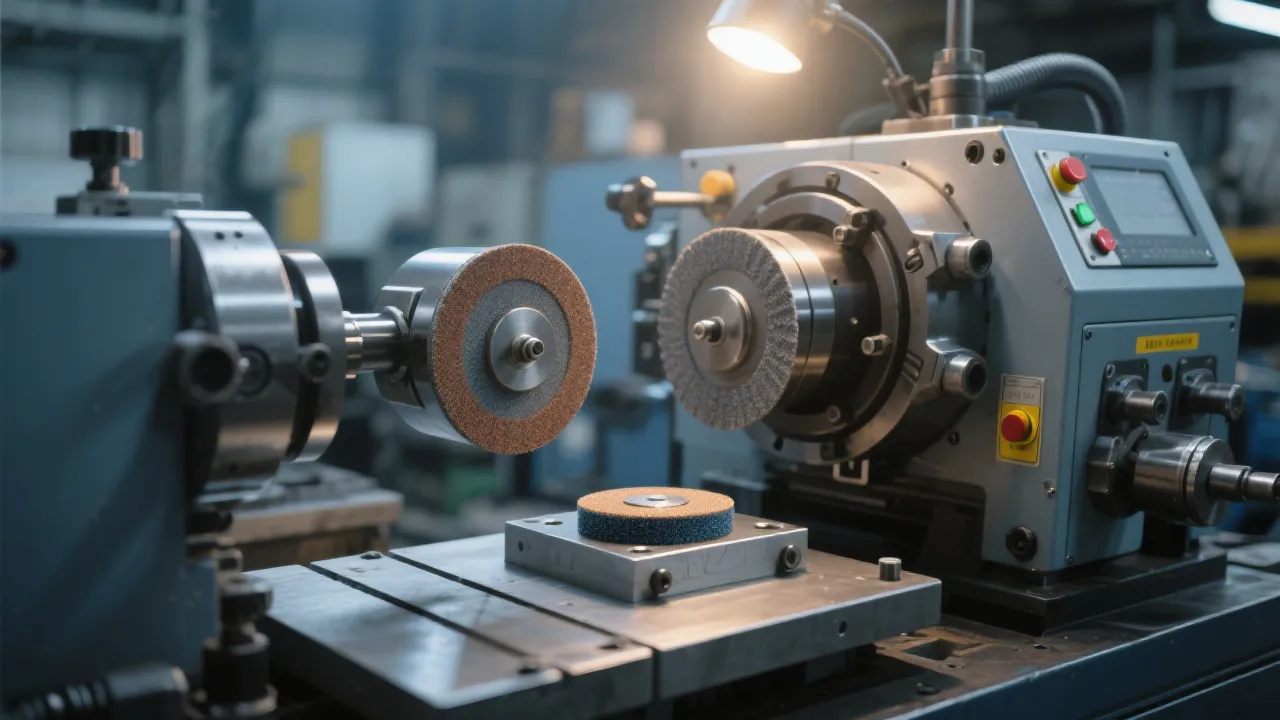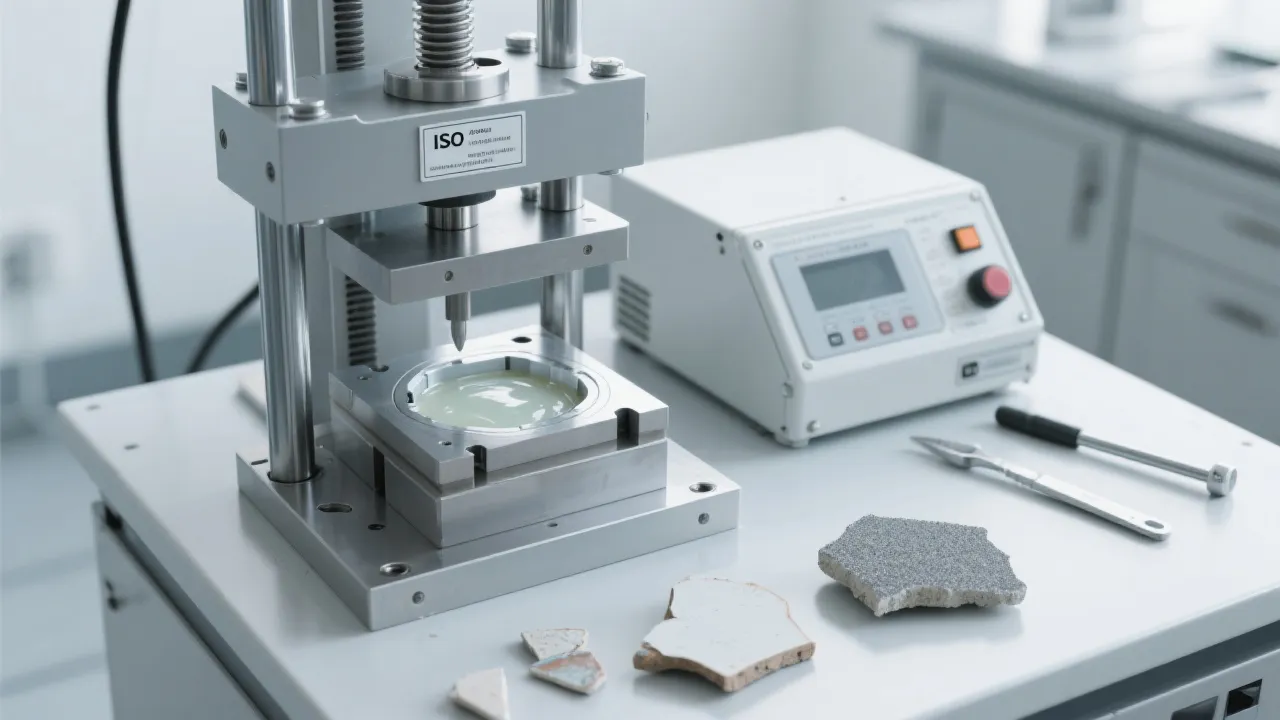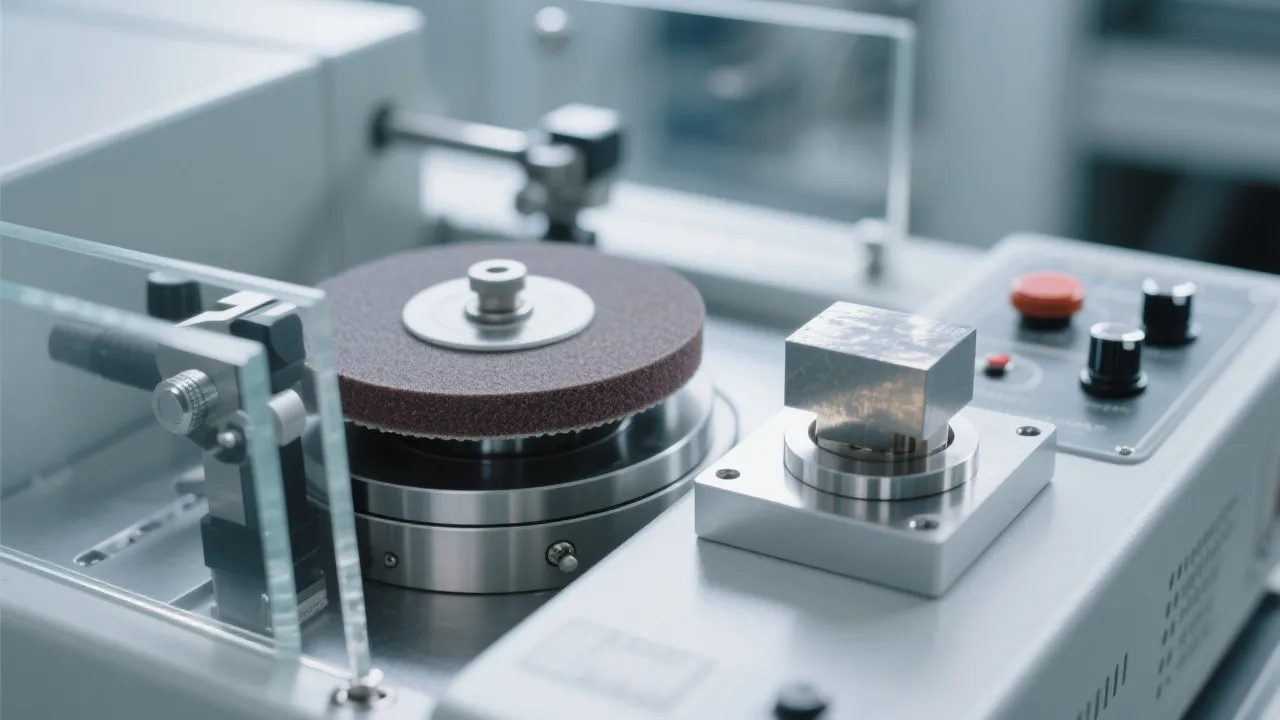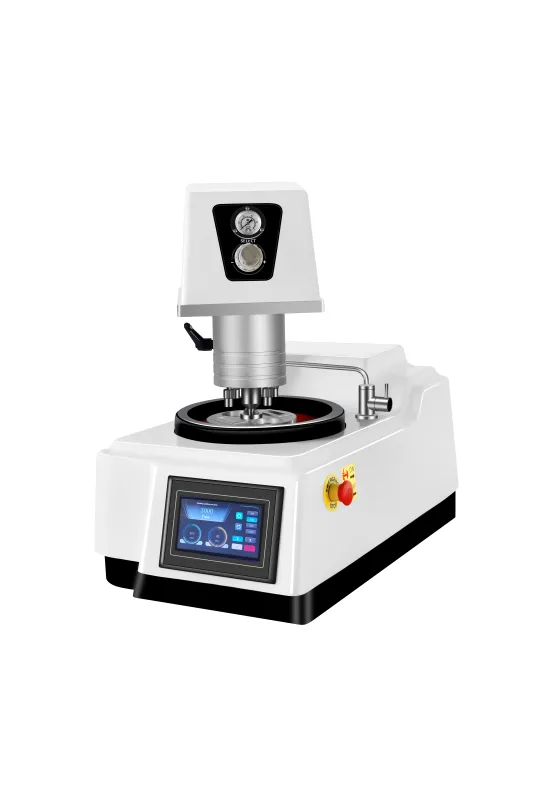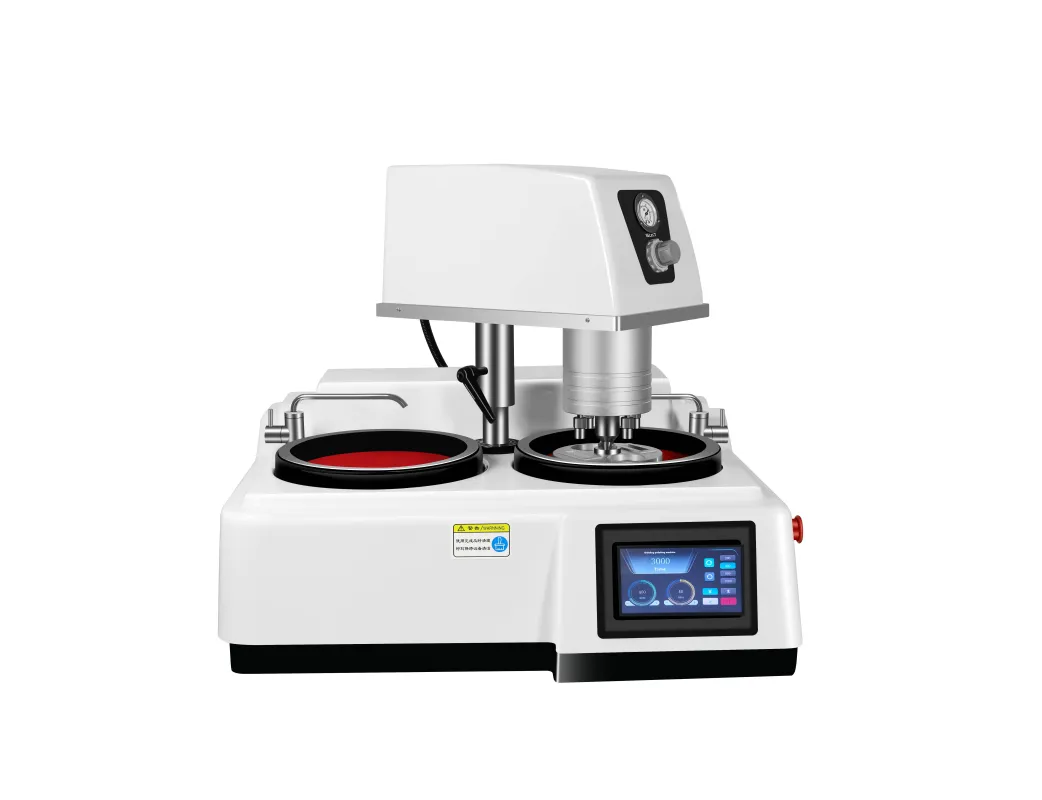
Selecting the appropriate grinding and polishing equipment is crucial for laboratory technicians, material engineers, and researchers to optimize sample preparation processes, enhance detection efficiency, and ensure high - quality results. This guide will delve into the key factors to consider when choosing such equipment and introduce the MP - 2DE Dual - disc Manual Grinding and Polishing System by Laizhou Jincheng Industrial Equipment Co., Ltd.
When selecting grinding and polishing equipment, several core factors need to be taken into account. First, the performance indicators of the equipment are of utmost importance. For example, the grinding speed can range from 100 to 3000 RPM, which directly affects the efficiency of sample processing. A higher speed is suitable for rough grinding, while a lower speed is better for fine polishing. The torque of the equipment also plays a role in ensuring stable operation during the grinding and polishing process.
The second factor is the applicable sample types and application scenarios. Different materials, such as metals, ceramics, and polymers, require different grinding and polishing methods. For instance, in metallurgy, the equipment needs to be able to handle hard metals like steel and iron, while in the field of ceramics, a more delicate grinding process is required. The equipment should also be adaptable to various sample sizes, from small laboratory samples to larger industrial parts.
Operational simplicity is another key consideration. A user - friendly interface and easy - to - understand controls can significantly reduce the learning curve for operators. Additionally, low maintenance costs are essential for long - term use. The cost of consumables, such as grinding wheels and polishing pads, should be within a reasonable range, and the equipment should have a long service life with minimal breakdowns.
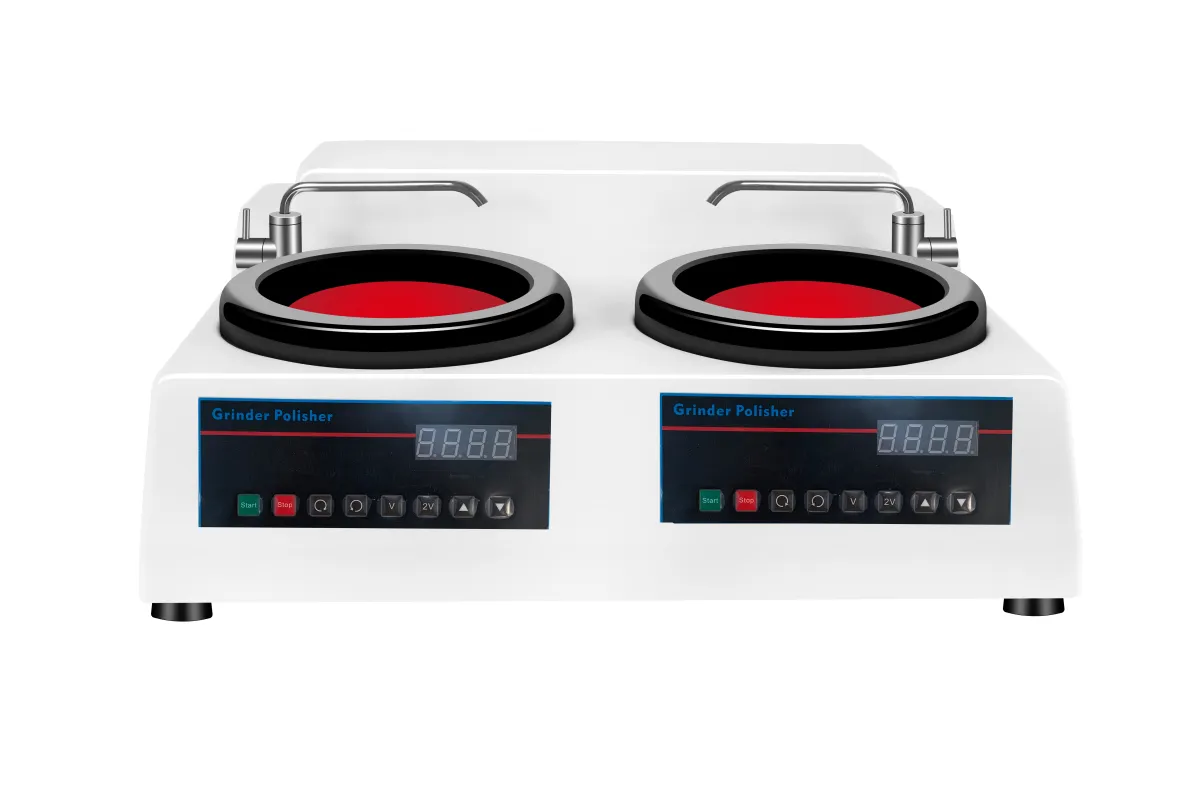
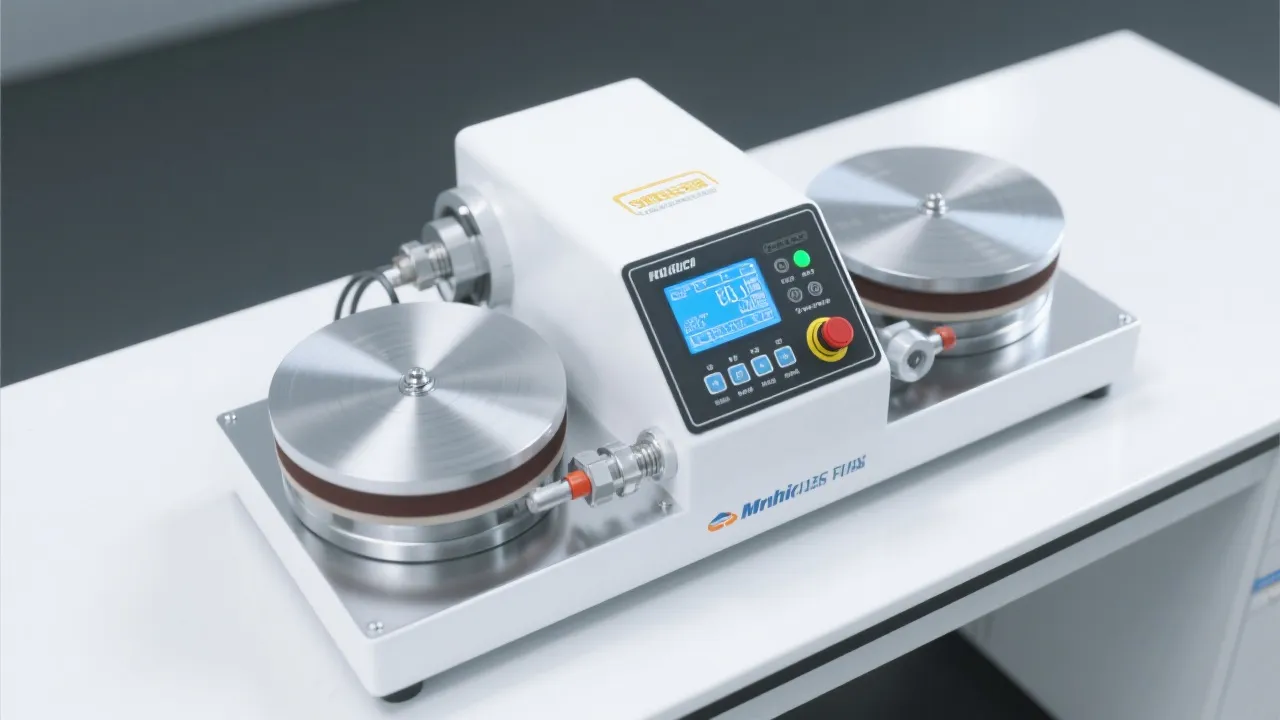
The MP - 2DE system by Jincheng stands out with its unique features. It has a dual - control mechanism, which allows operators to independently control the two grinding and polishing discs. This feature provides greater flexibility in sample processing, especially when dealing with different types of samples or when performing multiple processing steps simultaneously.
The system is equipped with a variable - speed adjustment function. The speed can be adjusted from 50 to 1500 RPM, which meets the requirements of different grinding and polishing processes. Whether it is rough grinding or fine polishing, the MP - 2DE can provide the appropriate speed.
The MP - 2DE also features a high - strength ABS shell design. This not only provides good protection for the internal components but also makes the equipment more durable. The shell is resistant to corrosion, which is suitable for use in various laboratory and industrial environments.
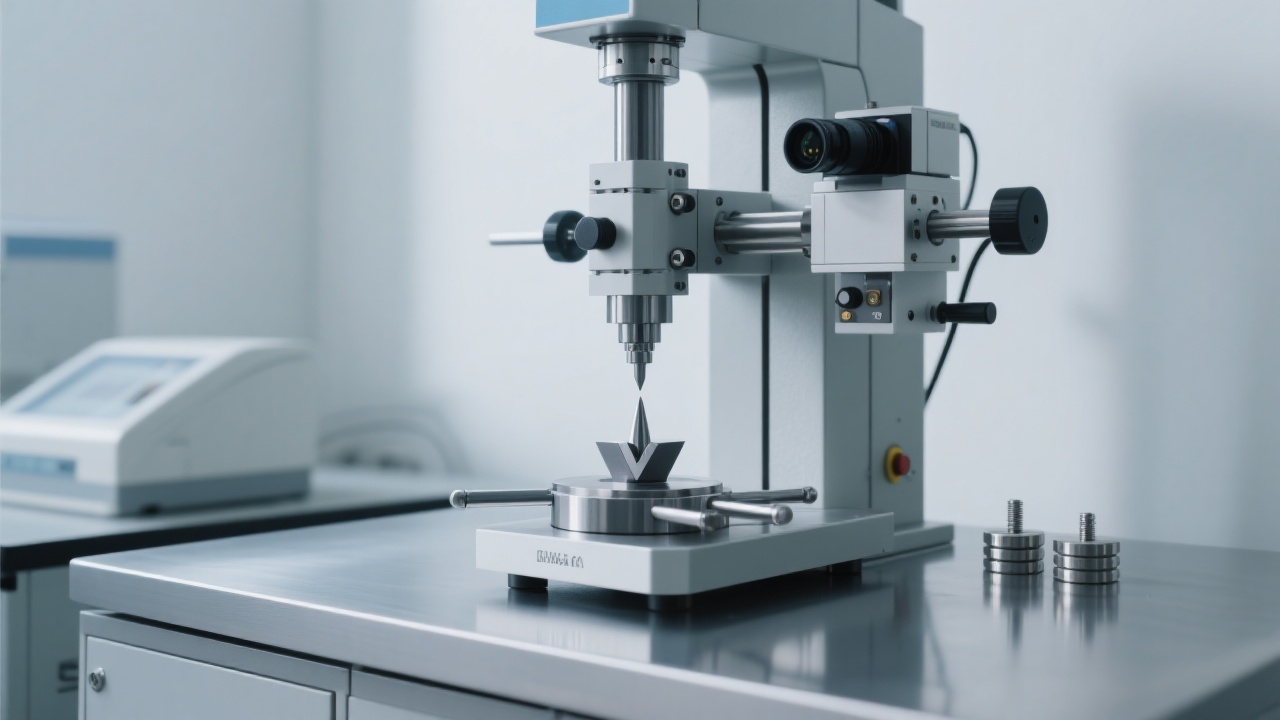
Moreover, the MP - 2DE complies with international standards such as ASTM and ISO. This ensures that the equipment can be used in various global projects and research, providing reliable and consistent results.
In the mechanical manufacturing industry, the MP - 2DE has been widely used for the sample preparation of metal parts. For example, a machinery factory used the MP - 2DE to prepare samples for quality inspection. By using the dual - control mechanism and variable - speed adjustment, they were able to improve the surface finish of the samples, which in turn enhanced the accuracy of the inspection results. The production efficiency increased by about 30% compared to the previous equipment.
In the field of metallurgy, a research institute used the MP - 2DE for the analysis of steel samples. The high - strength ABS shell design ensured the stability of the equipment during long - term use. The variable - speed adjustment function allowed them to perform different levels of grinding and polishing, which was crucial for in - depth analysis of the steel structure. The research institute reported that the MP - 2DE helped them to obtain more accurate and detailed data, improving the quality of their research.
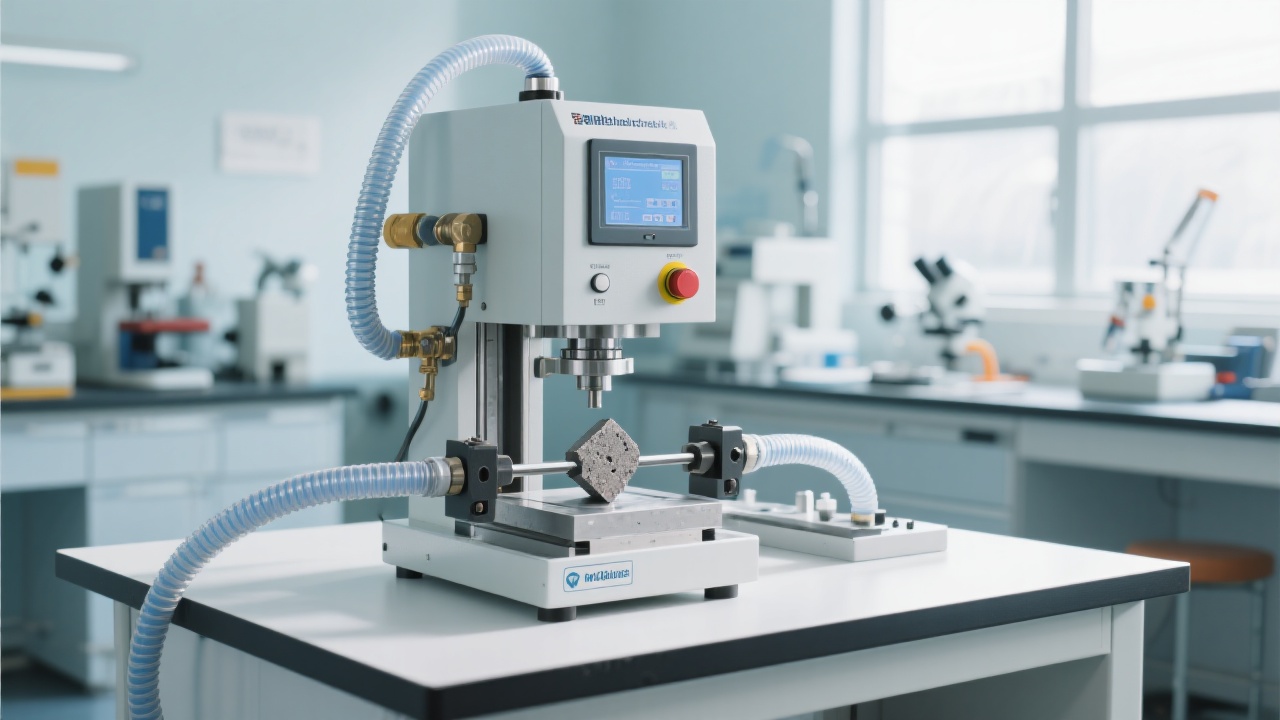
Q: Can the MP - 2DE handle large - sized samples?
A: Yes, the MP - 2DE is designed to be adaptable to a wide range of sample sizes. It can handle samples up to 200mm in diameter, making it suitable for both small laboratory samples and larger industrial parts.
Q: How often do I need to replace the grinding wheels and polishing pads?
A: The replacement frequency depends on the usage intensity and the type of samples. Generally, for normal laboratory use, the grinding wheels may need to be replaced every 3 - 6 months, and the polishing pads every 1 - 2 months.
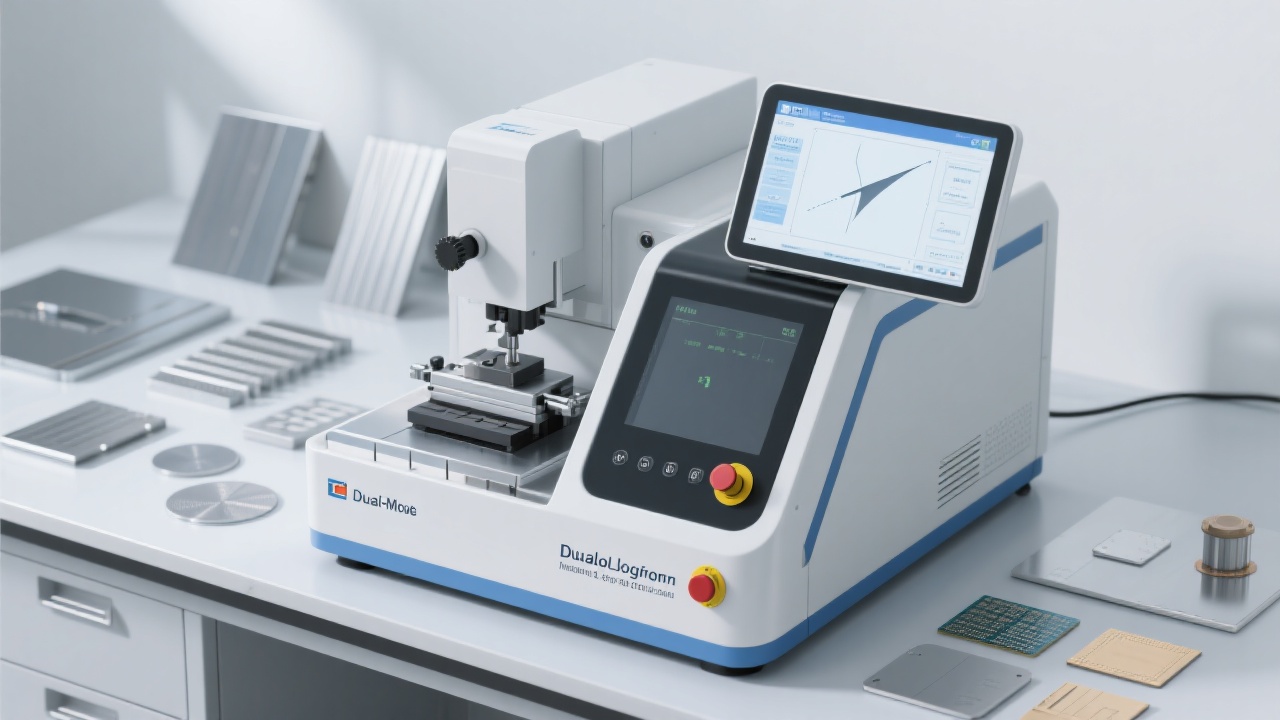
Ready to enhance your sample preparation process with the advanced MP - 2DE Dual - disc Manual Grinding and Polishing System? Click here to learn more.
 Metallographic polishing scratch troubleshooting
Metallographic sample grinder - polisher usage skills
MP - 1B polishing fault solutions
Metallographic sample quality improvement
Metallographic sample preparation polishing precautions
polishing machine housing material
corrosion-resistant lab equipment
fiberglass reinforced plastic for industrial machines
metallographic polishing equipment durability
lab equipment maintenance best practices
metallographic grinding machine operation guide
touchscreen metallographic equipment tutorial
four-level constant speed grinding techniques
metallographic sample preparation for beginners
sample grinding process
Metallographic cutter selection
Metallographic cutter maintenance
Cutter fault diagnosis
Reinforced grinding wheel specifications
Cooling system maintenance
Precision cutting machine touch - screen control
Metallographic sample preparation automation
Laboratory equipment human - machine interaction upgrade
PBQ - 200 Metallographic Precision Flat Cutting Machine
Industrial automation cutting equipment
Metallographic polishing scratch troubleshooting
Metallographic sample grinder - polisher usage skills
MP - 1B polishing fault solutions
Metallographic sample quality improvement
Metallographic sample preparation polishing precautions
polishing machine housing material
corrosion-resistant lab equipment
fiberglass reinforced plastic for industrial machines
metallographic polishing equipment durability
lab equipment maintenance best practices
metallographic grinding machine operation guide
touchscreen metallographic equipment tutorial
four-level constant speed grinding techniques
metallographic sample preparation for beginners
sample grinding process
Metallographic cutter selection
Metallographic cutter maintenance
Cutter fault diagnosis
Reinforced grinding wheel specifications
Cooling system maintenance
Precision cutting machine touch - screen control
Metallographic sample preparation automation
Laboratory equipment human - machine interaction upgrade
PBQ - 200 Metallographic Precision Flat Cutting Machine
Industrial automation cutting equipment